I’m Tracy Worcester and I run a market garden producing chemical-free veg for the local community and witnessing how hard it is to make a living from farming. I’ve made many films about family farmers across the world to see how they survive and continue to feed their communities in spite of being undermined by global trade and agribusiness and by supermarkets who import cheaper chemical-intensive food from abroad.
In the summer of 2025 my partner Alastair and I headed to Georgia, famous for its rural culture, to hear how the farmers still largely feed their communities with locally produced meat and cheese from pasture-fed cattle, sheep and goats. Ten percent of the country’s food production is still organic.
After the breakup of the Soviet Union in the 1990s, Georgia’s large scale collective farms were broken up and villagers were each allocated 1.5 acres – many of whom now produce vegetables, honey and dairy for local markets. Their livestock graze freely whether in the lowland villages, open savanna grasslands or rich summer mountain pastures.
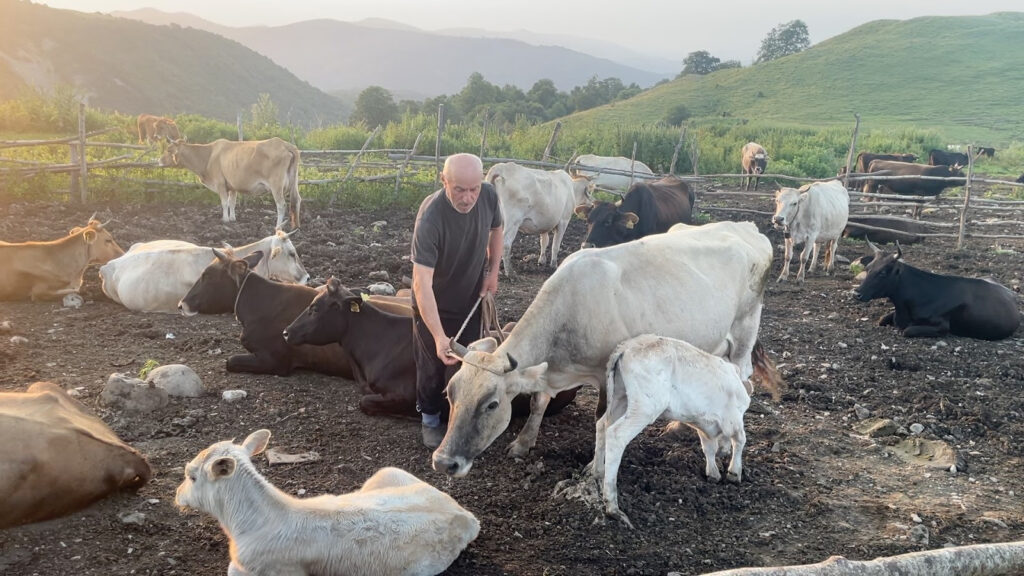
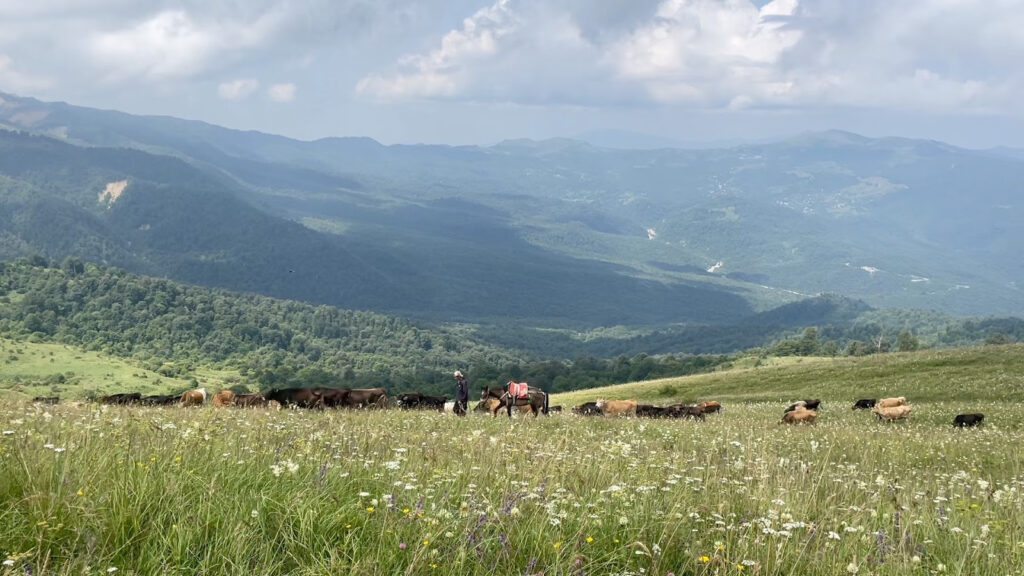
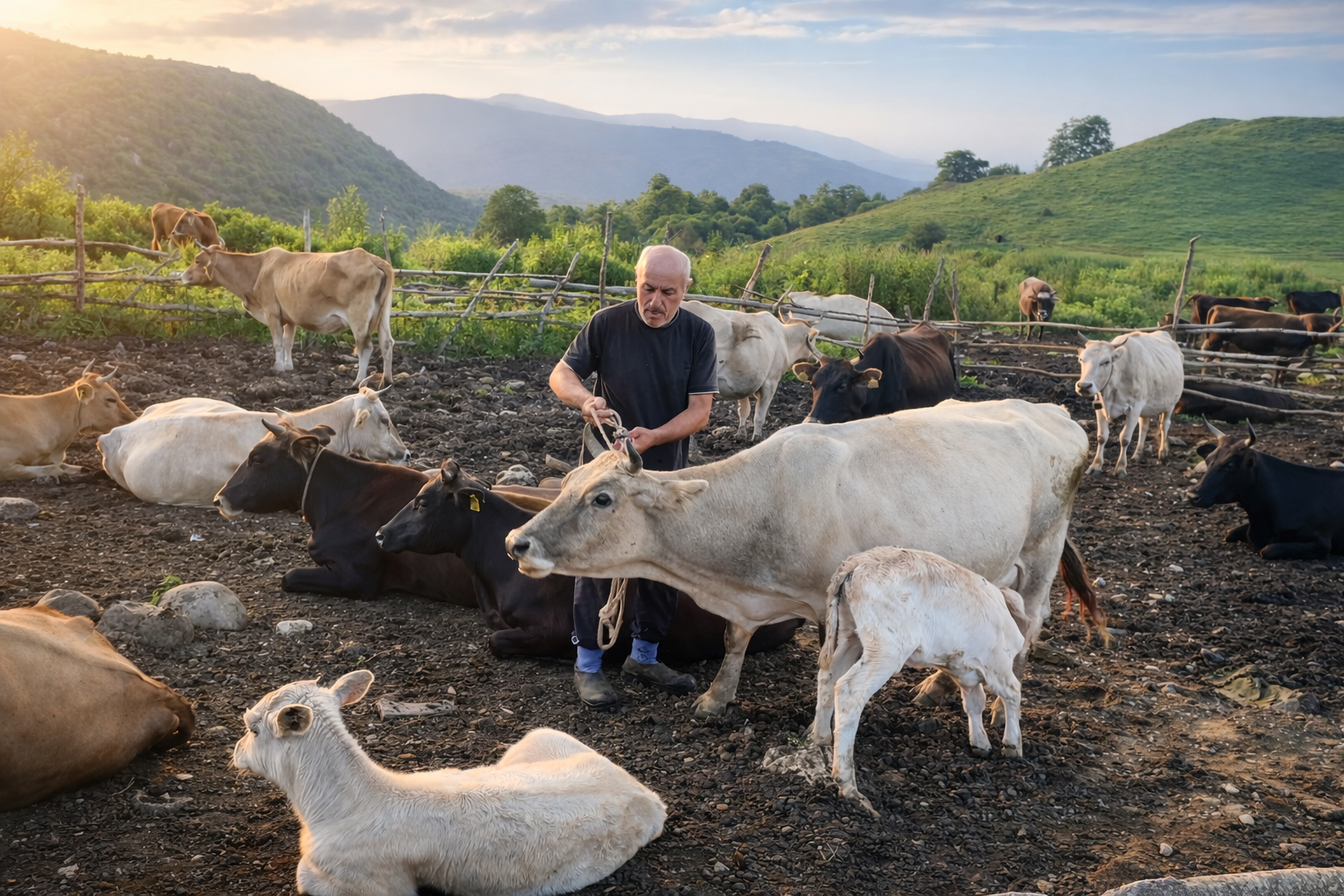
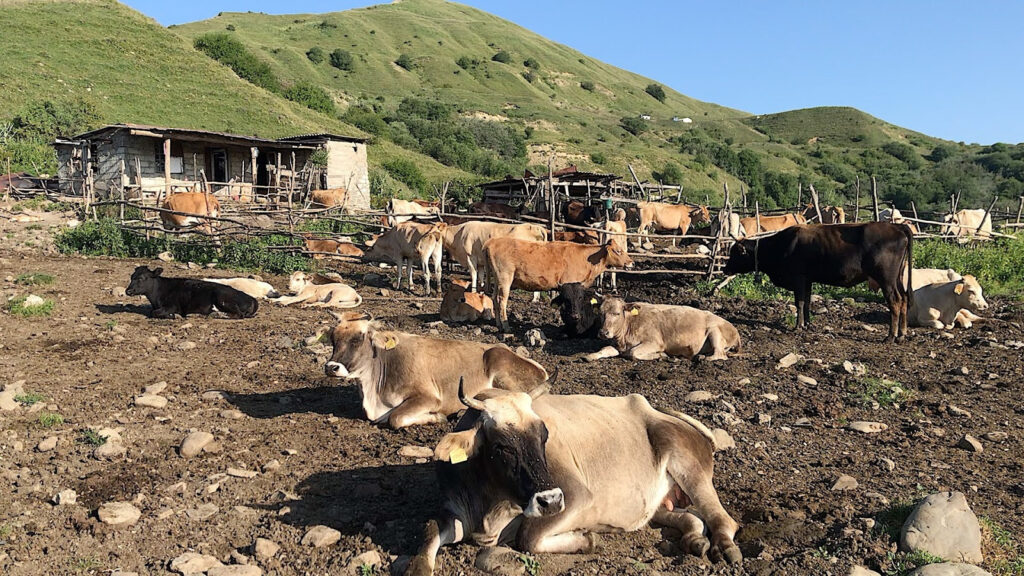
First we headed up to visit cattle farmers on their summer pastures in Kakheti, about two hours drive northeast of the capital Tbilisi.
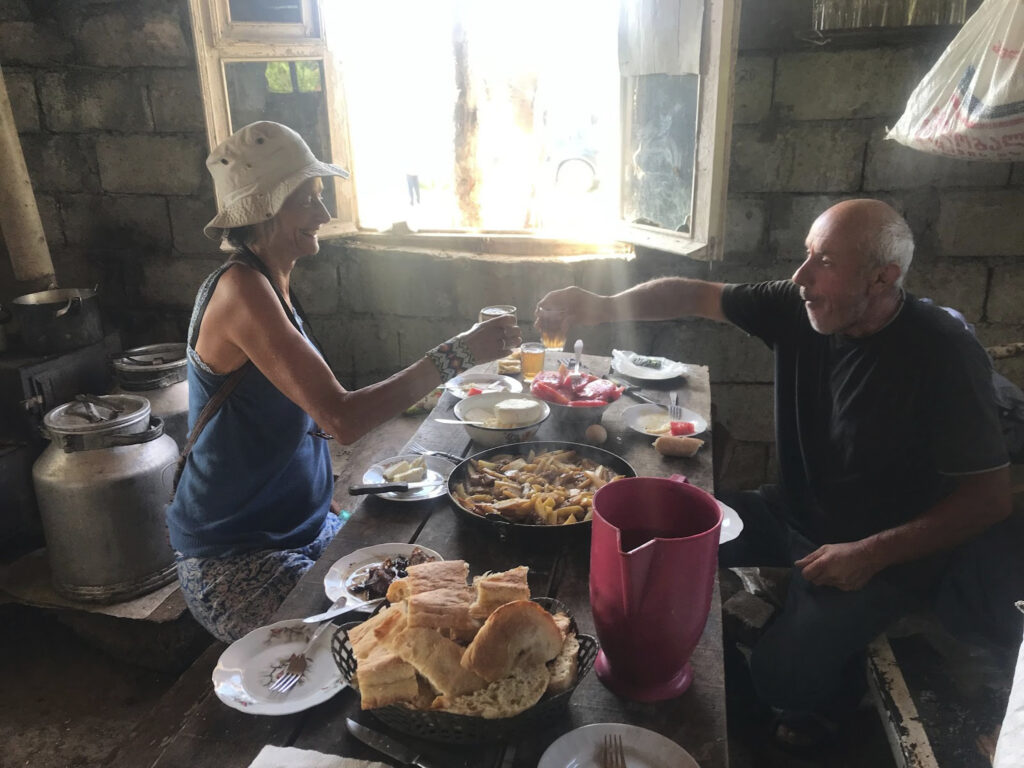
Though worried about the long term viability of grazing the mountain pastures, Gia and his team relish their summers in the mountain shack where they raise calves for beef and make heritage cheese and yogurt to sell in the markets in the villages below.
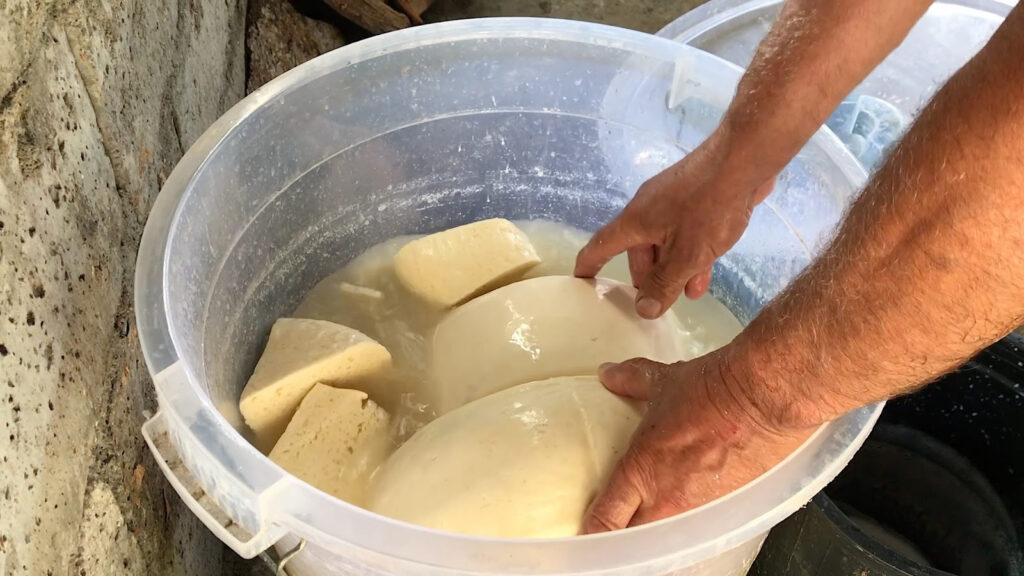
GIA; “Before these wars our goods went to Iran by trailer.
It’s not going there anymore. It’s sold locally now, and the price has dropped.”
Across the globe farmers who have abandoned traditional methods are suffering. To compete with cheap substandard imports found in the increasing number of supermarkets, some Georgian farmers have taken on crippling debts to grow fruit and veg that can compete with cheap imports from Turkey. Leri explained that the expense to produce monocultures of tomato and apples exhausted his bank loans forcing him to go to a pawnbroker.
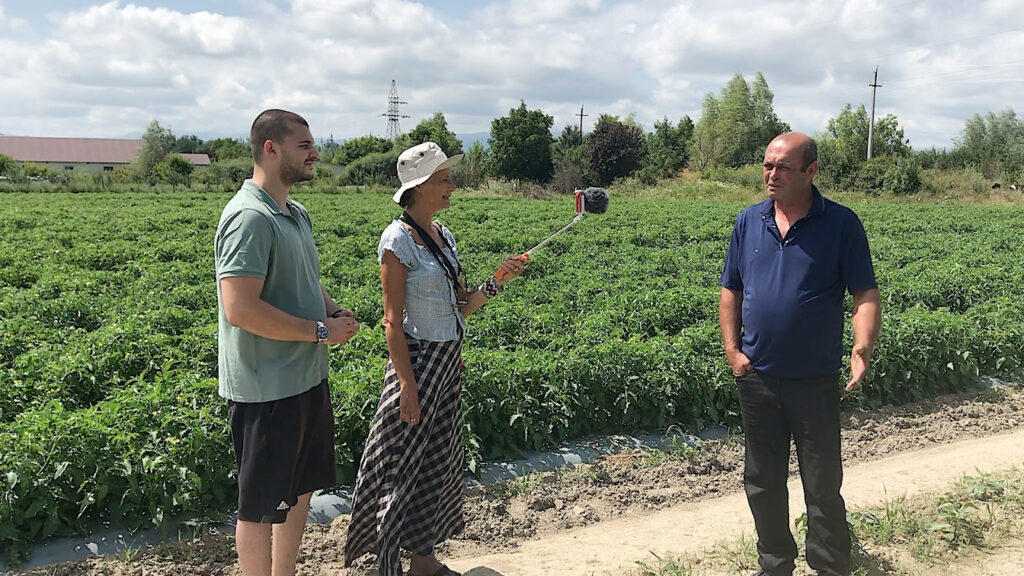
LERI; “It has been seven years since I planted the orchard. The costs have been huge — planting, nets, maintenance, fertilisers, spraying, and many other things. Without a bank loan, you can’t get anything done. But the loan is often not enough. Then you go to the pawnshop, and try to manage somehow and the end nothing works out.”
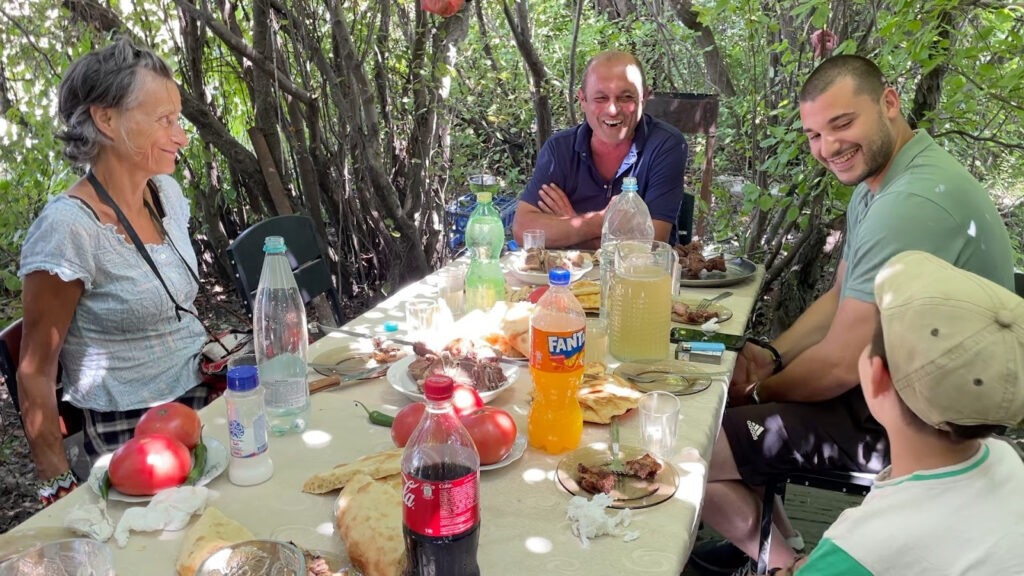
Only Leri’s grandson’s presence at lunch brought a smile to his troubled face.
Modernising is not inevitable, and we visited Wano Lapauri who with his father can thrive growing cucumbers and fruit using traditional, chemical-free methods and selling in Telavi, the local market town.
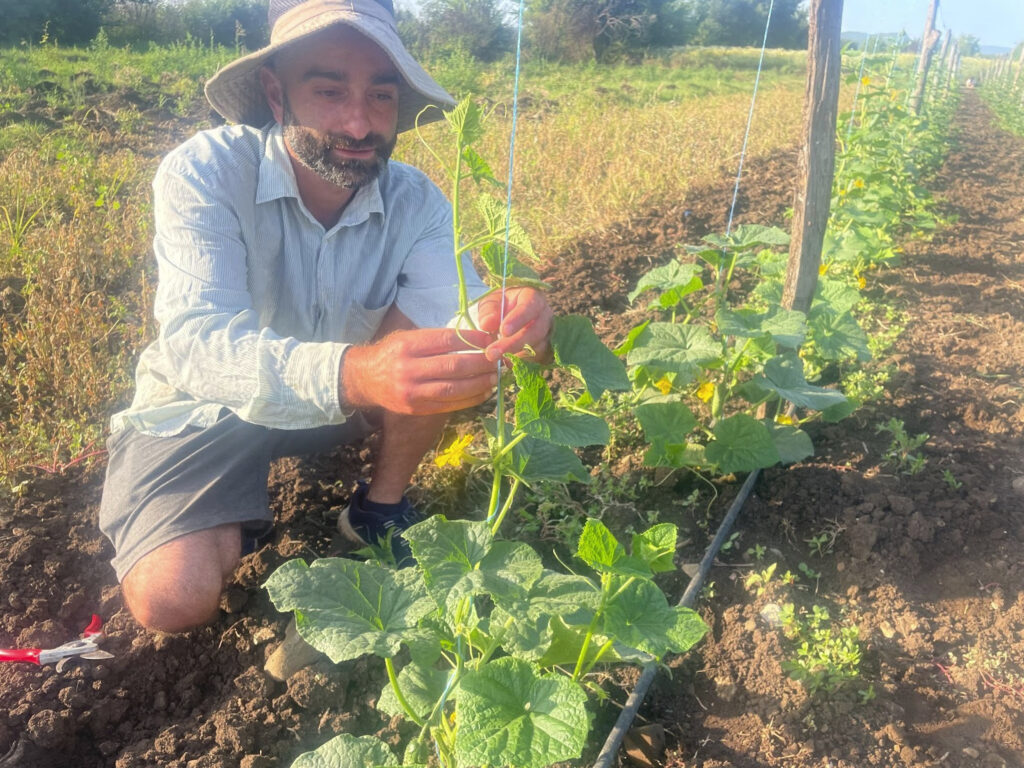
WANO; “Farm life isn’t easy. You have to love what you do, otherwise, you can’t endure it.
Of course there are people who like it and have been used to it since childhood.
It’s essential to be connected with nature.”
We travelled on the beautiful 6-hour train journey across Georgia from Tbilisi to Zugdidi. From the window of the train we had a taste of life in the villages where we could see livestock wandering freely grazing on village greens, roadsides between the charming houses and surrounding gardens.
From Zugdidi we hitched a lift to Mestia and from there took the tourist bus up to Ushguli, the highest inhabited village in Georgia. Our driver Reza told us that he and his family were relocated from their village near Mestia after avalanches destroyed many of the houses, but his cousins were still living there, farming cattle and keeping bees. We stayed a night in their farmhouse and Reza told us that he is determined that his children will visit their uncle’s farm often and learn village skills, traditions, and love for the land.
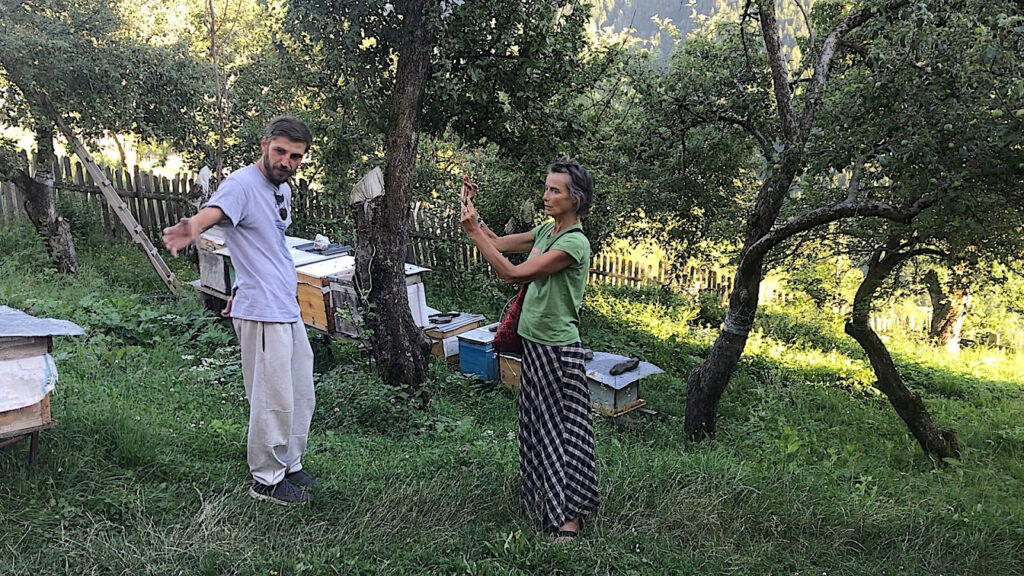
REZA “Svaneti has one of the oldest bee species in the world. The longer I live, the more I want to raise my children in the same way —so they understand that its necessary to spend time in the village to learn how to farm as these skills will help them when they grow up.”
Although locals call it a desert (‘Ubdano’ means desert in Georgian), Southeast Georgia is actually rich savannah grassland which grows with such abundance that it supports grazing for cattle, sheep and goats as well as providing hay for winter fodder.
Most of the people now living in Udabno village are farmers who raise livestock. They have consolidated their 1.5 acre holdings and treat the grazing around the village as common land. All the houses have sizeable gardens and families grow vegetables, nuts and fruits and keep bees and poultry while the odd pig family roams the streets and hinterland. Udabno village has only one small shop selling tinned food and soap etc, which is also a local taxi service.
Giorgi and his family arrived when the village was originally built in the 1980s to resettle people displaced by avalanches in Svaneti, in W Georgia and to ensure Georgians inhabited the area near the border with Azerbaijan. He explains that by keeping bees he was able to escape from poverty in the 1990s that was widespread when Georgia became independent and Russian-owned businesses moved away.
Today Giorgi with his wife and son Luca produce eggs, vegetables, honey and keep eight cattle which provide an income that is supplemented by Luca’s part time job at the nearby Udabano Farm Project.
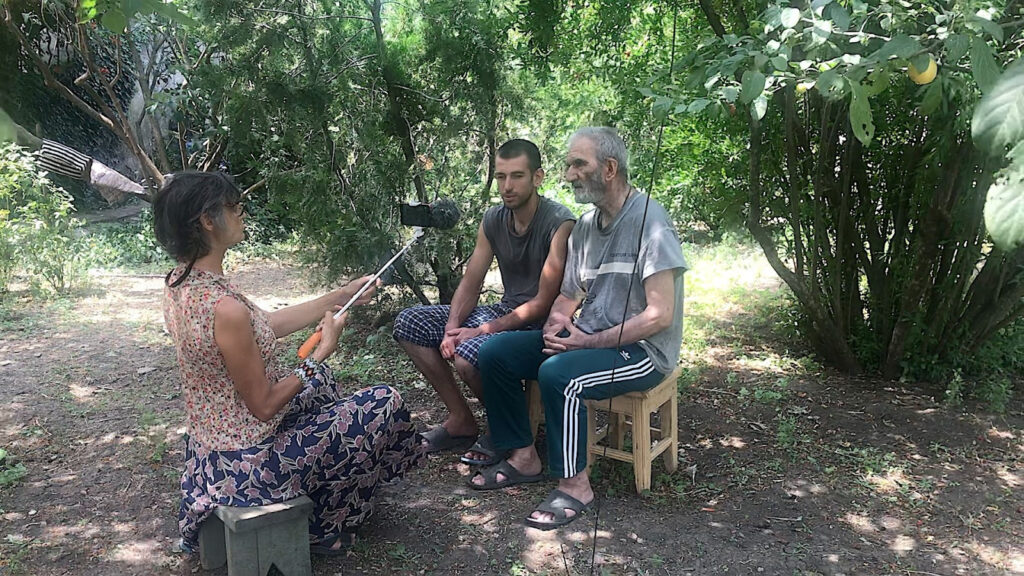
GIORGI and LUCA
GIORGI; “When I bought bees, we were living in poverty. I love bees very much. You can’t be a beekeeper if you don’t love bees. It helped us economically and we managed to support our family of four children.”
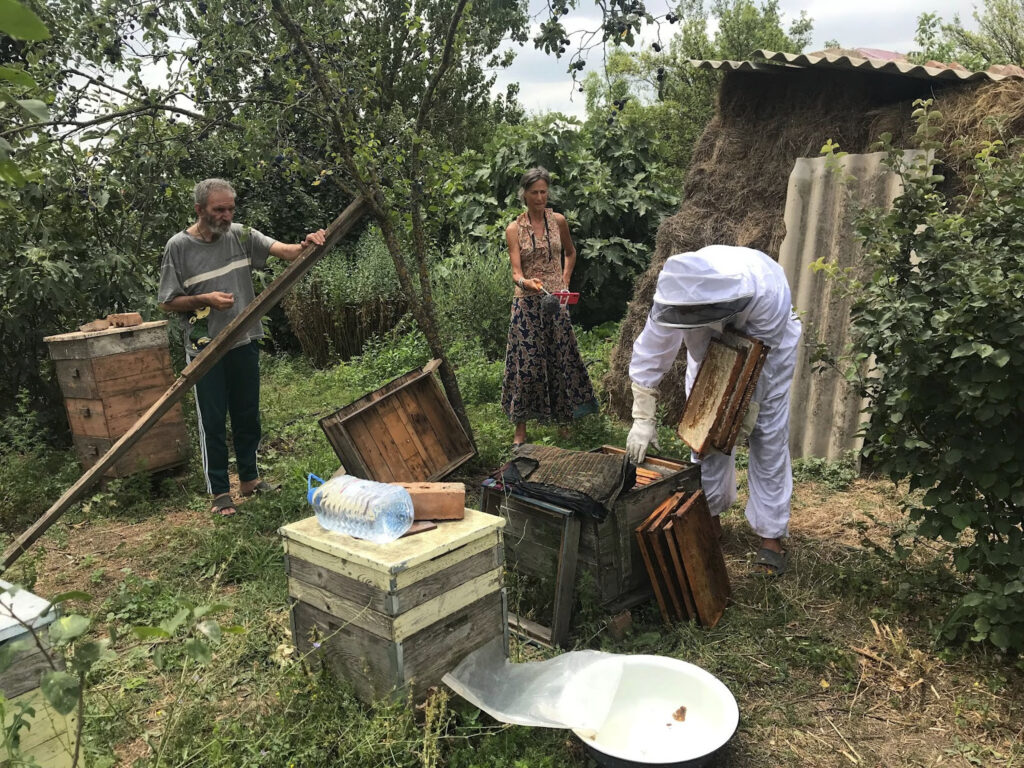
LUCA: “I just want to use my abilities to the fullest whether it’s with cattle, bees or something else here in my village. “
About 20 minutes drive from the village is the enormous, 20,000-hectare Udabno Farm Project which was started in 2016 by Georgian philanthropist Temur Ugulava. The project is the largest regenerative farm in Europe and employs many people from the local area. Its aim is to enrich soils by organic agro-ecology and agro-forestry methods, planting traditional crops, regenerating forests and grazing livestock namely buffalo, cattle, ducks, chickens and pigs that provide food for several hotels and restaurants that the company owns across Georgia.
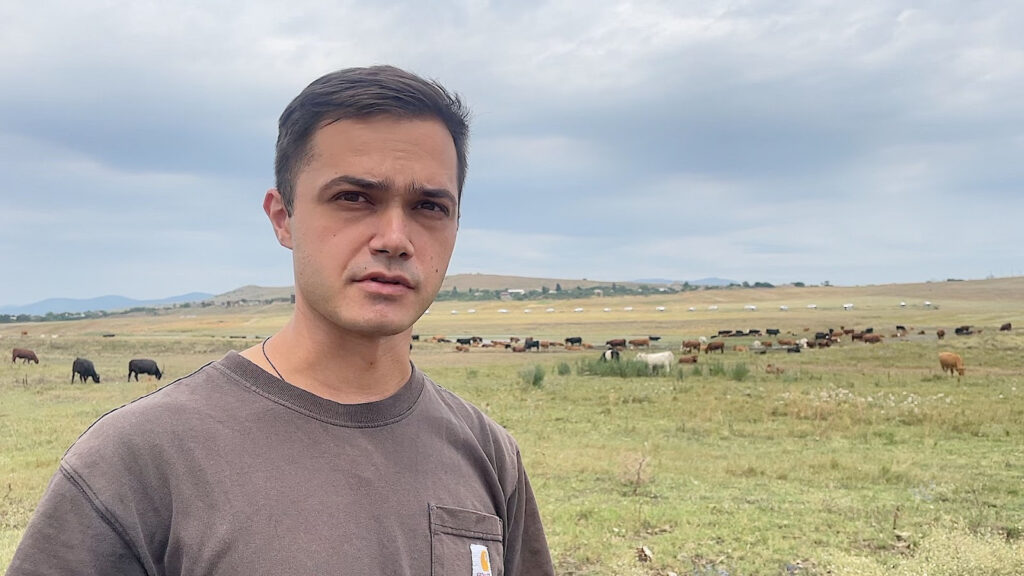
ALEX; “This will be an ecological and creative village where guests can come and stay in caravans.
So in the lower part we planted many olive trees. Above you can see circles of almond trees, as well as various fruit trees.”
Whether from big farms or small, when consumers seek out local organic food, small farm businesses can thrive.Tika the owner of our guest house in Zugdidi, took us to visit her friend Natia who farms dairy cattle and geese, and makes several types of cheese from her cattle that graze along with the free range pigs on the common land around the village.
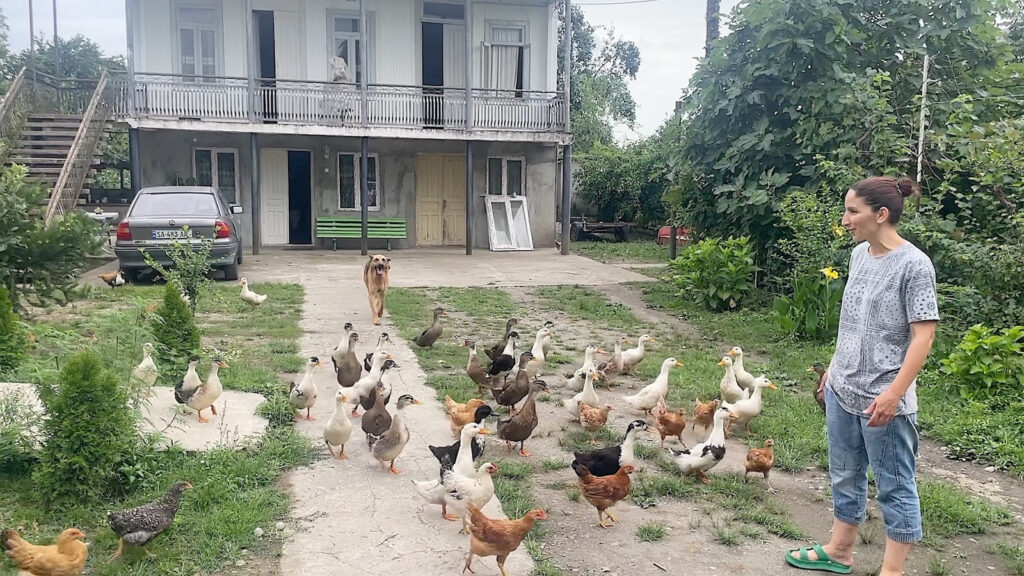
NATIA; “Most of my products are sold locally. Some clients buy directly from me. Family hotels place orders and bring their guests here.”
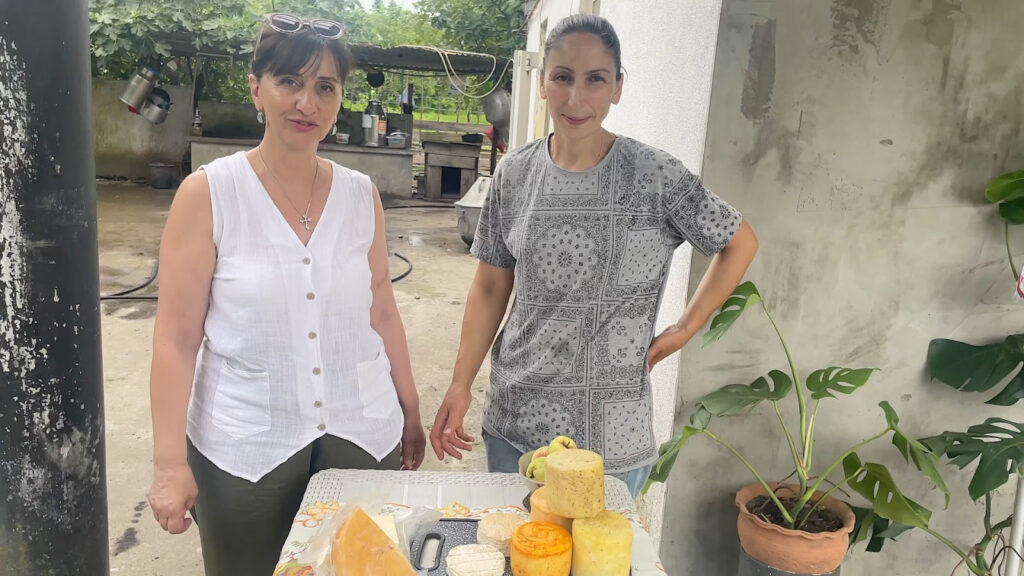
TIKA; “Whenever I ask her for duck, chicken, grains, flour, or fruit like figs or oranges, if she doesn’t have them herself, she can get them from other farmers. There’s no order that she can’t help me with.”
Don’t let corporations replace your local food economy with junk food. For natural, unprocessed food buy from local small scale farms or their markets.
Share This Article
Related ArticlesView All
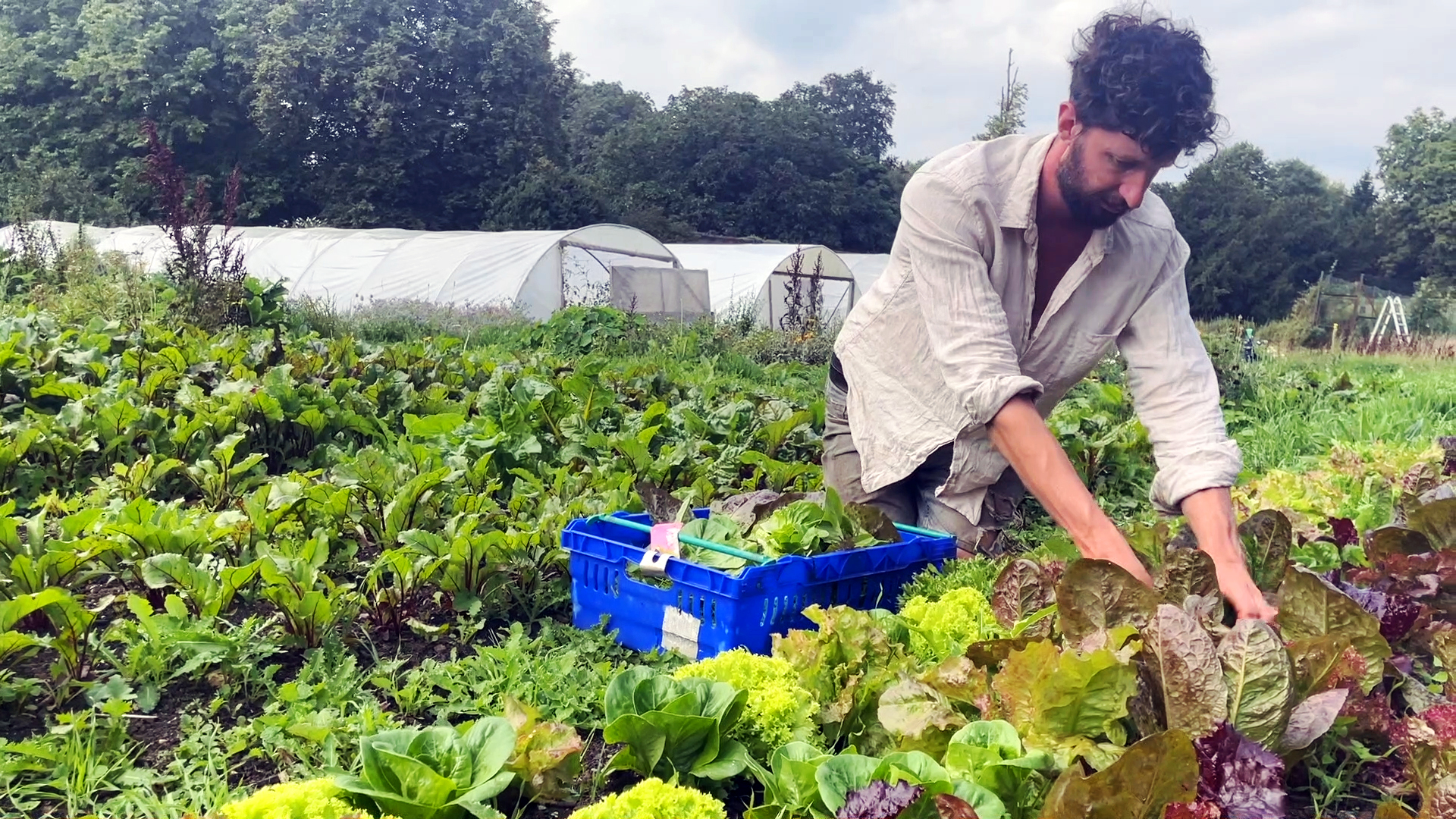
Wise Farmers: Will Hall
Will Hall, 34, started farming about eight years ago while halfway through doing a PhD at the University of Bristol… Read More

Wise Farmers: Gerald Miles
Gerald Miles is a seventh-generation farmer on the Pembrokeshire coast in West Wales, where he farms organically 120 acres of… Read More

Wise Farmers: Ben Andrews
Ben Andrews and his father Colin run an organic farm at Broadward Hall in Herefordshire near the border with Wales…. Read More

Borneo Villagers Battle For Freedom – Sarawak
Join us on a journey to Nyegol village in Sarawak, Malaysia, where the Bidayuh community has rebuilt their homes high… Read More

Wise Farmers: Nicolette Niman
After graduating from Kalamazoo College in Michigan with a Bachelor’s Degree in Biology and French, Nicolette Hahn Niman attended the… Read More

Wise Farmers: Benj Wilson
Benj grew up in rural Gloucestershire, where his father David was the manager of King Charles’ organic farm at Highgrove…. Read More